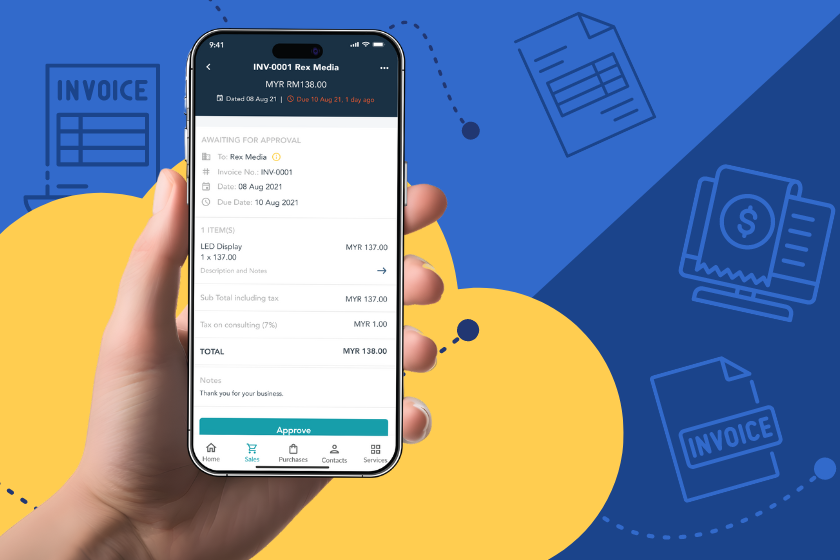
How Can Businesses Switch From Old-school Billing To E-invoicing in Malaysia?
They can make the switch by outlining their billing processes getting customer info ready, picking LHDN-approved accounting software teaching their team, running both systems side by side during the grace period, and step by step automating invoice checks through MyInvois to make sure they’re on board by 2025.
Many Malaysian companies that have been around for a while have stuck to old-school billing methods. They’ve used handwritten receipts printed invoices, carbon-copy books, and Excel spreadsheets to keep track of their finances. These ways of doing things were cheap, easy to understand, and worked just fine for everyday business for a long time. But now, as Malaysia moves towards a digital tax system, these traditional billing methods just won’t cut it anymore.
The rollout of mandatory e-invoicing unveiled in Budget 2024 and backed by IRBM’s (LHDN) push to go digital, stands as the country’s most significant change in financial reporting in years. Big taxpayers with earnings of RM100 million and above already had to comply by 1 August 2024. The rest of the taxpayers, no matter how big or small their business, will need to follow suit by 1 July 2025.
This quick implementation has many small and medium-sized businesses worried and uncertain about how to start getting ready for the change — those who’ve used paper billing for a long time. But the switch doesn’t have to be scary. With the right plan, software, and schedule e-invoicing can boost productivity, make things more accurate, and help you follow the rules without much effort.
What Is E-Invoicing?
E-invoicing isn’t just turning a PDF invoice into a computer file. It’s a well-organized, computer-readable document created and sent through the MyInvois system for LHDN to check right away.
After checking, LHDN sends back an e-invoice with:
- A one-of-a-kind ID number
- A QR code
- Details to check for audits and taxes
This changes invoicing from a fixed, in-house paper to a safe legal record backed by the government’s main system. It also gets rid of format differences, calculation mistakes, and slow reporting.
New E-Invoicing Rules in Malaysia (2024–2025)
While the first plan needed strict following, IRBM gave a six-month easy period knowing that companies need time to adjust.
During this grace time:
- Companies can send out monthly combined e-invoices
- No fines will happen for slow joining
- Firms are urged to start to get benefits
Companies that met their original deadline also qualified for shorter capital allowance claim periods on ICT equipment — showing how the government wants to encourage digital change.
Streamline Your Billing With Our Top-rated E-Invoicing Software
Why Your Company Should Switch to E-Invoicing Soon
Even with extra time from the six-month delay early users get big benefits in how they work. Old-style billing often leads to lost receipts double entries, and mixed-up reports — all of which make audits, money analysis, and tax filing hard.
E-invoicing fixes these problems by:
- Making financial papers the same across the board
- Cutting down on human mistakes
- Shaping invoices to follow tax rules on its own
- Making reports faster and clearer
- Checking and tracking changes right away
What’s more, as Malaysia takes steps toward better financial openness and digital enforcement putting off the change adds to future workload and compliance stress.
Getting to Know B2C E-Invoicing Situations in Malaysia
Many small businesses shops and food places, are concerned that giving out e-invoices to every walk-in customer will slow things down. The IRBM has laid out two practical ways to handle this:
Situation 1: When a Customer Asks for an E-Invoice
Some buyers — those who can get tax breaks — might ask for an e-invoice. In these cases:
- The seller needs to get the customer’s info (including TIN if needed).
- An e-invoice goes straight to MyInvois.
- MyInvois checks it and gives it back to show the customer spent money.
This makes everything clear and follows the rules.
Situation 2: When a Customer Doesn’t Ask for an E-Invoice
Most sales are like this.
- Companies give out normal receipts like always.
- They put all these sales into one big e-invoice at the end of the month.
- They have to send this big e-invoice within 7 days after the month ends.
This makes things much easier for businesses that sell a lot.
Old-School Billing vs E-Invoicing
| Process Area | Traditional Billing | E-Invoicing Workflow |
| Invoice Format | Paper, PDFs, emails | Structured digital format validated by IRBM |
| Data Accuracy | High human error risk | Auto-validated entries |
| Tax Filing | Manual compilation | Automated & standardised |
| Record Keeping | Physical storage | Cloud-based, easy retrieval |
| Compliance | Difficult to track | Built-in with MyInvois rules |
| Processing Time | Slow & repetitive | Fast, automated workflow |
How to Transition Smoothly Into E-Invoicing
Planning leads to a successful transition. Businesses can prepare in stages instead of rushing into the change.
1. Map Your Billing Workflow
Find where invoices start — sales, procurement, operations, delivery teams, or branches. Knowing your workflow helps you avoid missing any needed documents.
2. Audit Customer & Supplier Data
E-invoicing needs complete and consistent data. This includes registration numbers, TINs, addresses, and tax categories.
3. Pick an LHDN-Approved Accounting Software
Not all accounting systems can work with MyInvois. Your system must have:
- API submission
- QR code creation
- Automatic checks
- Accurate bookkeeping
4. Teach Internal Teams
Finance, operations, sales, and retail staff need to know:
- When to use e-invoices
- What info to gather
- How checks work
- How to handle B2C sales
5. Use a Parallel System
Keep using your regular billing system while you test out e-invoicing processes. The grace period gives you a chance to fix mistakes without getting penalized.
6. Use Automation When You Can
Automating tasks helps keep things consistent, cuts down on errors, and stops things from getting backed up when it’s busy.
How DigiSME Accounting Software Makes Switching Easier
Our accounting software is built to work with Malaysia’s e-invoicing system. Unlike basic bookkeeping tools, it offers full integration and automation, including:
- Send invoices straight to MyInvois
- Auto-create QR-coded checked e-invoices
- Store years of audit-ready records in the cloud
- Turn quotes/POs into e-invoices right away
- Use a mobile app to issue e-invoices at work sites or shop counters
- Get system updates when IRBM changes rules
This helps your business stay in line with rules without much effort — no need to do calculation by hand or rush at the last minute.
To Wrap Up
The move from paper bills to electronic invoices might seem daunting, but it gives you a chance to update your money matters and improve rule-following. As Malaysia requires full e-invoicing use by 1 July 2025, it’s smart to switch, pick up skills over time, and use machines where you can.
The right bookkeeping program — one made for Malaysian rules — makes your billing easier more correct, and much less worrying. Our online accounting tool helps companies stay in front, follow rules, and work well during this country-wide digital change.
Contact Us For A Free Demo!